London · Autumn 1887

Prove what it is. Then go and meet it.
Get notifiedIn development for Steam first, then iPhone
No release date and no price yet
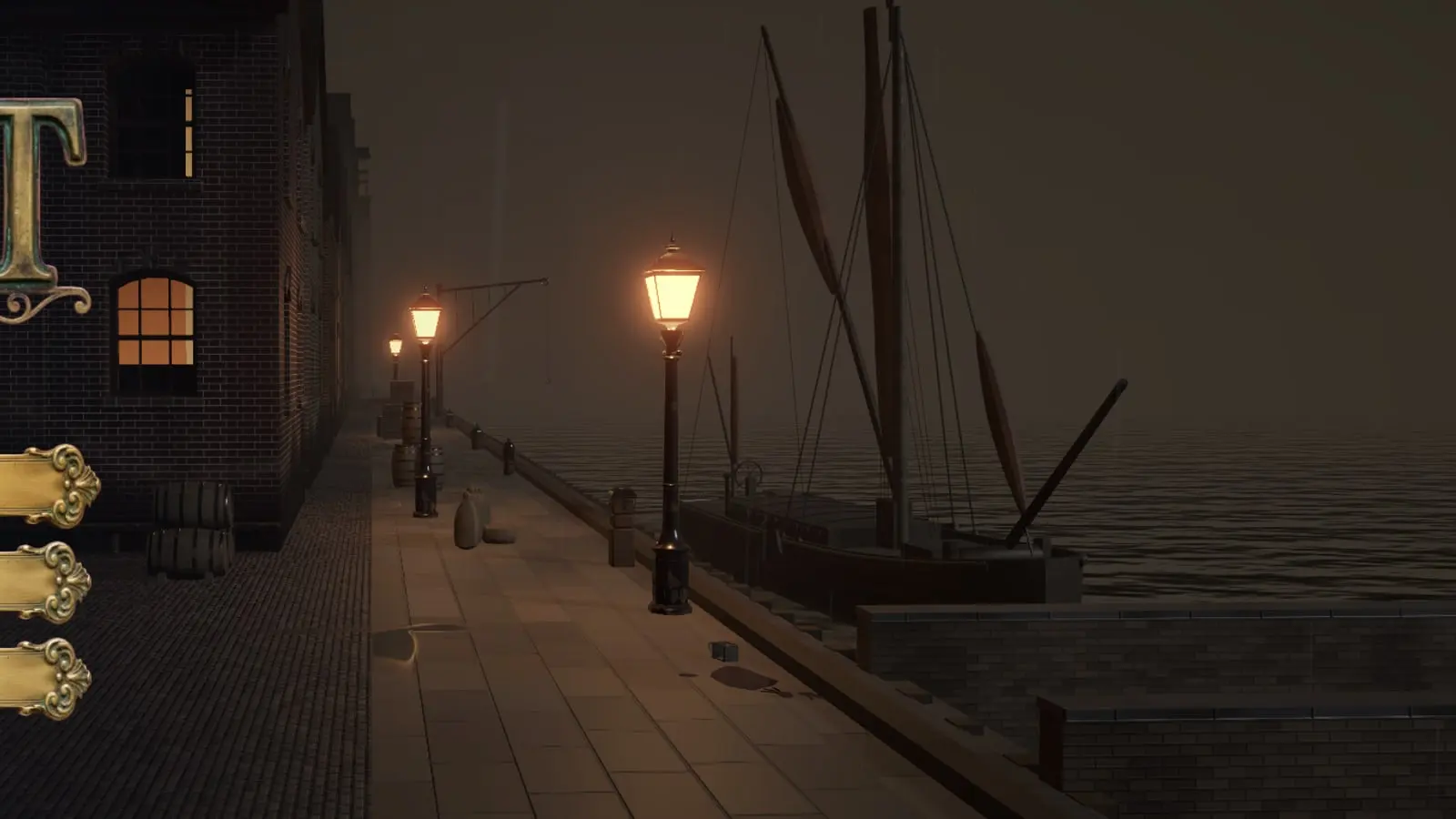
The quay at Limehouse · in-engine, development build
A year ago you were the night watchman who looked, and held a thing off on the Limehouse foreshore. Now Inspector Abberline has handed you Warrant Nº 47, a police warrant for something that isn't a man. Three are dead on the foreshore, no two wounds alike. You have four nights to prove what it is. After that it comes for you, whether you've proved it or not.
- 1Case
- 4Nights
- 4Facts to prove
- 5Instruments
- 7Fight verbs
- 3Kinds of attack
The Warrant
The whole case is four facts about one monster. A fact is either proved or it isn't, and a suspicion is worth nothing when it comes at you.



What each proof buys you
- NatureWhat is it?The thing gets a name, and you can read what it resists.
- PatternHow does it open?Its tell shows sooner, its reach is marked, and you get longer to parry.
- BaneWhat hurts it?You can coat the blade: three charges of the counter.
- GroundWhere is it weak?Lure it to ground you prepared and it arrives already off balance. The fight opens on a stagger.
Go in blind and the fight still teaches you: survive its attacks and the warrant starts filling itself in.
Dusk to Dawn
A night runs from six in the evening to dawn, twelve hours, and the city is your clock. Everything you do spends some of it.



The clock in the corner of the screen: four moons, three hours each, each filling as its quarter of the night passes. Click it and the hour comes up. Here it's half past one.
third stair · 23:00 Low water
night I · 02:30
- 15 minEach step at an instrument, right or wrong
- 15 minA conversation
- 20 minPreparing the ground
- 5 minBuying what you need

Walking costs time. A hansom, hailed on a main road, costs a fare and fewer minutes. The sums are the game's own, worked out from where you are and where you're going.
The Thames keeps its own hours. Its tide is set from the 1887 tables for London Bridge: on night one low water falls at half past two, and each night it comes about fifty minutes later. Fall in and it won't drown you, but it costs you time and soaks your powder.
Run out of nights and nothing is called off. It comes for you anyway.
The Field
Facts aren't handed out. You go and get them with five instruments, each a short observation you work through by hand, at three sites: Limehouse Docks, Leman Street and a Whitechapel alley.

- LanternThe site, the hour, what was left behind
- SpectroscopeTowards Nature: what it is
- LoupeTowards Pattern: wounds tell you how it fights
- StrongboxTowards Ground: ledgers and tide tables
- WardTowards Bane: what holds it
Seventeen steps across the five, and every one is written for this case. An instrument gives you a fact, never a hunch, and wrong answers cost the same quarter hour as right ones.

Inspector Abberline, Leman Street
Take him what you've proved, or ask what the Yard knows. On supported iPhones he can answer in his own words through Apple's on-device model. The game decides what he confirms, and when the model is unavailable, slow or off-register he says a written line instead. You never type anything to him.
The Night Board
Press M and the street gives way to a drawn map of the city, with the night's hour on a brass plate and the warrant's four seals along the foot.

The game's London is laid out as forty districts. So far five of them, all on the north bank between the City and Limehouse, are built street by street, and so is the river. The rest are outlines for now. This plate is drawn from the game's own map data:
| Built so far | Buildings |
|---|---|
| The City & Smithfield | 1,055 |
| Tower & the Pool | 299 |
| Whitechapel & Leman Street | 146 |
| Wapping & St Katharine | 61 |
| Limehouse | 32 |
| The Thames | 53 |
The Confrontation
When it comes there's no switch to another mode. You fight it on the street where you're standing, in real time and up close, with what you proved.

Every attack it makes commits to one of three kinds, and the game shows you which before it lands. Each kind has its own answer.
| Crush | Guard it, or parry on the beat. | It can be guarded. |
|---|---|---|
| Sweep | Slip through it. | A guard tears. |
| Coil | Break it in the wind-up. | It can't be blocked. |
And some of what it shows you are feints, which nothing answers.


Seven things you can do
 StrikeA chain of three.
 HeavyHold it to charge.
 DodgeA moment where nothing touches you.
 GuardHold it, or time it and parry.
 CounterOnly once you've proved its bane.
 LanternA flare, then a wait before the next.
 WithdrawHold it down and get out alive.
You have one health bar and no way to heal mid-fight. It ends one of three ways: you put it down, it gets away from you, or you withdraw. Whichever it is, you keep what you proved. The game also punishes cowering behind your guard, and it punishes flailing just as hard.


The Foreshore
Before the warrant there's the night it started. You play it once, at the start of a new game.
Limehouse · 14 October 1886
A night watchman on his round of the third stair's lamps goes down to look, and holds out against something on the foreshore. He can't kill it. He only has to last until it breaks off into the river.
The fight writes his statement, four lines long. The first:
“It was not a dog.”
Born from Duels

Hunt is inspired by the world of Duels, a Victorian spell-duelling game for iPhone. Duels' lore had three wars running at once. Hunt takes the one with monsters in it, the Hunter against the things in the fog, makes it the whole game, and rebuilds it from scratch. Duels is paused, and its page is still up. Why one gave way to the other is in the journal: Paused, not forgotten.
Hunt is built the 0n1 way. The game's own code makes no network requests, includes no third-party analytics or ad SDK, needs no account and asks for no tracking permission. Your progress is saved on your device.
On Steam, your achievements, a best-time score and your save sync through Steam. There's no privacy policy yet; it will come with the first store page.
Where It Stands
Hunt is in development. Today's builds run the prologue on the foreshore and one case, the Dockside Horror, played between Limehouse and Leman Street. Every picture on this page is a capture from one of those development builds, not a mock-up, and none of it is final. It's coming to Steam first, then iPhone. There's no release date and no price yet, and there won't be either until there's a game worth one.
The launch email, plus the odd meaningful update · unsubscribe any time
In development for Steam first, then iPhone