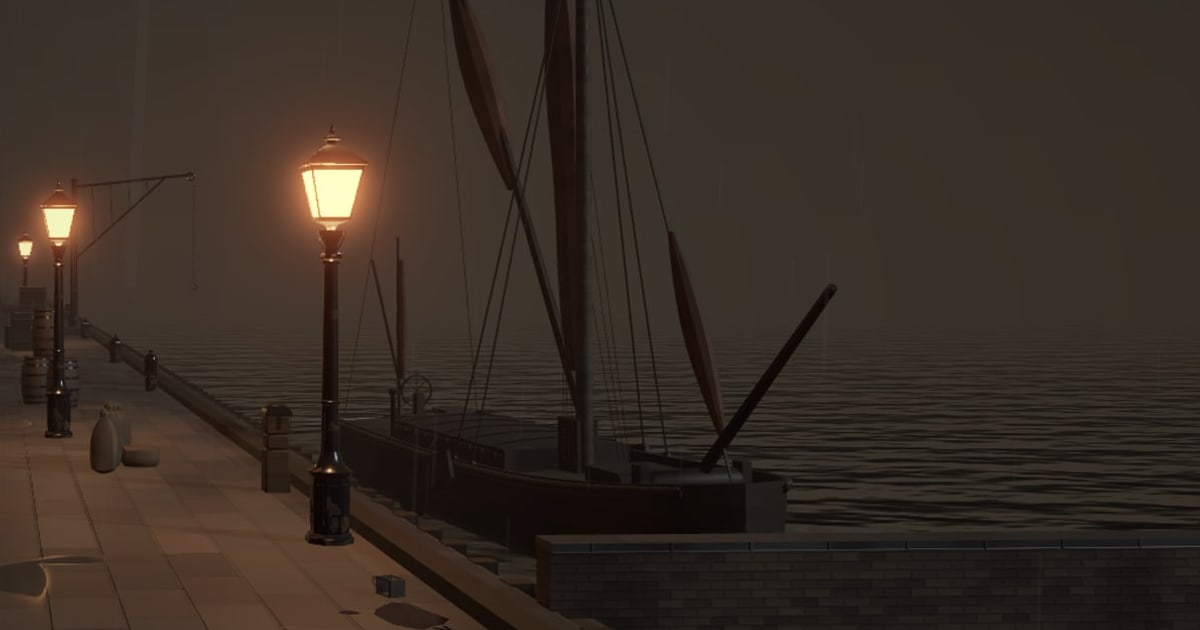
By September there were seven games on this site. One of them had shipped.
Runoff, Worldwright, LineBy, Duels, Everywhen, Adventure and Rockstar, all on evenings and nights, all after a day job. That works out to roughly one evening a week per game, which is enough time to remember where you left off and then go to bed.
So I stopped pretending otherwise. (Runoff has since landed on the Mac App Store, which takes the score to two. Don't let it go to my head.)
Too much on the go
Three of them are paused now: Duels, Adventure and Rockstar are archived. Their code is safe, their pages are still up, and they're not coming back to this site's homepage any time soon. Paused is the honest word. Cancelled would be a lie in the other direction, because I still like all three and I am very bad at letting things go.
What I wanted instead was one new game I'd be proud to put in front of a stranger. That meant quality and polish over yet another prototype, and a lot fewer things competing for the same Tuesday night.
Why Hunt
Duels was my Victorian spell-duelling game: gaslit London in 1887, real historical occultists and a roster of monsters out of the period's own fiction. It had six months of evenings in it and a lore bible far bigger than the game that used it.
Hunt keeps the world and changes the job. You're the night watchman who saw something on the Limehouse foreshore, and Inspector Abberline has handed you a police warrant for something that isn't a man. You have four nights to prove four facts about it — what it is, how it opens, what hurts it, where it's weak — and then it comes, and you fight it on what you proved.
It started on 24 August as a fork of Duels' lore. Four days later it moved to Unity, because a three-minute fight on a phone was never going to use that much world.
I meant to polish a case
The plan was modest: one case, the Dockside Horror, between Limehouse and Leman Street. Make it good.
But a case set across four nights in London needs the nights to be London. A night runs from six until dawn and the city is the clock: walking costs minutes, a hansom costs a fare, and asking questions costs time you don't get back. You can't make that feel right with a painted backdrop. You need streets, and the streets need to go somewhere.
So, one evening at a time, it became a simulation. The game's London has forty districts. Five of them, plus the river, are built street by street so far: Limehouse, Wapping, Whitechapel, the Tower and the City, about 1,600 buildings between them, and the City alone has 1,055. The walk from the docks to Leman Street takes the best part of half an hour, and the clock charges you for every minute.
The river, though, is the part I'm proudest of.
The one useful thing: let the clock decide
The Thames in Hunt isn't animated. It's calculated, from just two numbers: which night it is, and how many minutes have passed since dusk. So the game's rules and what you see on screen can never disagree about where the water is.
The trick is the timing. The river runs low twice a day, but not every twelve hours: low water to low water takes twelve hours and twenty-five minutes. Two of those make a day and fifty minutes, so low water doesn't come back at the same time each night. It drifts fifty minutes later.
// Semidiurnal: low water to low water is 12 h 25 min, so each
// night's low water falls ~50 minutes after the last.
public const int PeriodMinutes = 12 * 60 + 25;
public const int FirstLowWater = 510; // night one, 02:30 — from the 1887 tables
On the first night the water is lowest at half past two. By the fourth night you're waiting until about five, with dawn coming. Nobody wrote that as a difficulty curve. It falls out of the arithmetic, and the arithmetic came from the real 1887 tide tables.
If anything in your game moves on a schedule, try calculating it from the clock instead of storing it and nudging it along every frame. Saving, replaying and testing it then come for free, and sometimes it hands you a design you'd never have thought to write.
What it doesn't fix
It's not all of Victorian London. Five districts and the river are real. The rest are placeholder building fronts for now, and the Underground and the steamers are on the map but you can't ride them yet. There's one monster and one case. There's no date and no price, and no one outside this house has played it.
But it's one game getting the evenings that used to be spread across three others, which is the whole point. There's a page for it.
More soon — RSS if you'd like to hear how long I manage to stick to one game.